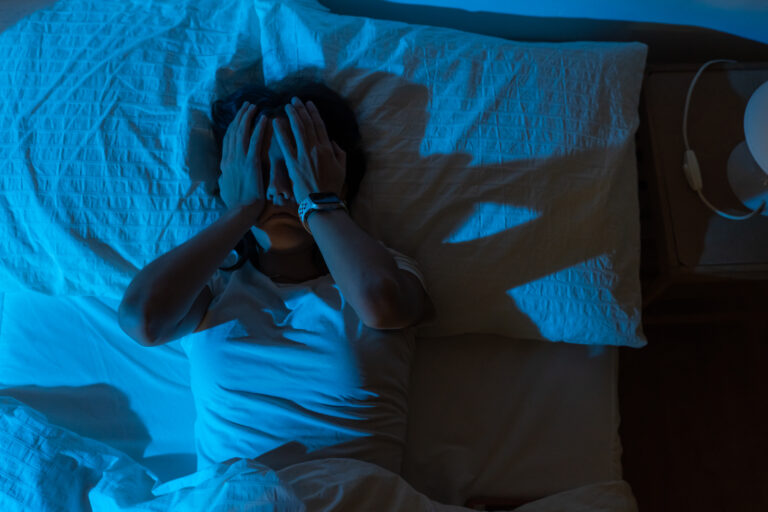
Ever wake up feeling tired, even after a full night of sleep? You’re not alone. Many people struggle with this frustrating phenomenon, and it often comes down to one key issue: light sleep.
You might think that the amount of time spent in bed is all that matters, but when it comes to sleep, quality beats quantity. While you may be spending enough time asleep, if you’re not getting enough deep, restorative sleep, you’ll still feel tired when you wake up.
What Is Light Sleep?
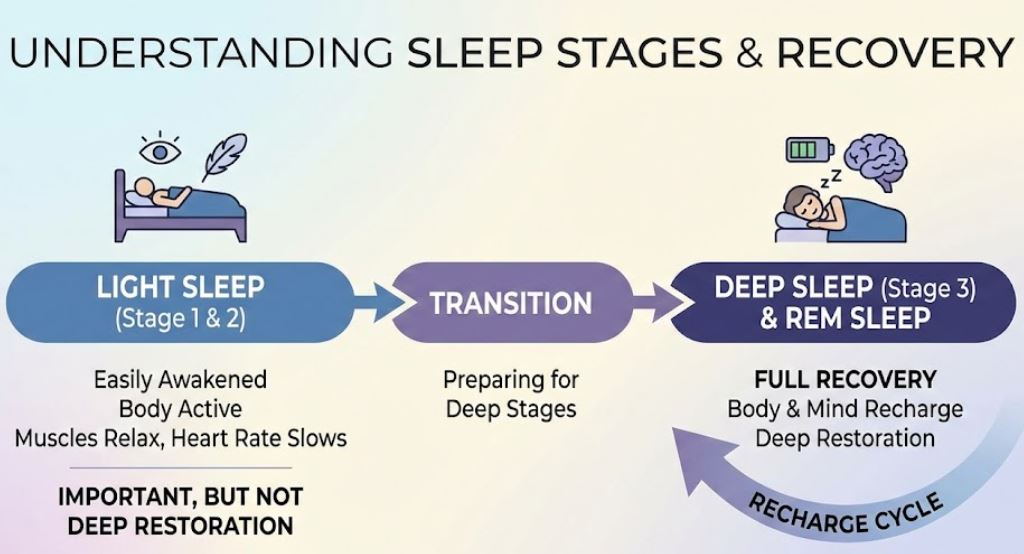
Sleep isn’t just one uniform state; it’s divided into different stages that each serve a specific purpose for your physical and mental recovery. Light sleep, as the name suggests, is the phase of sleep where your body is still somewhat “active.” During this stage, you’re easily awakened, and your body isn’t fully in recovery mode.
There are two types of light sleep: Stage 1 and Stage 2 of the sleep cycle. While these stages are important for the overall sleep process, they don’t offer the deep restoration that your body needs.
In light sleep, your muscles relax, your heart rate slows down, and your body begins to prepare for the deeper stages of sleep. But it’s not during these stages that the body and mind fully recharge. That happens during deep sleep (Stage 3) and REM sleep.
Why Light Sleep Leaves You Tired
So why does spending too much time in light sleep make you feel exhausted? The short answer is that your body isn’t getting the restorative benefits it needs. Light sleep doesn’t provide the same deep tissue repair, memory consolidation, or hormonal regulation that happens during the deeper sleep stages.
Here’s what you’re missing out on:
- Muscle Repair: Deep sleep helps your muscles recover and repair from the wear and tear of the day.
- Memory Consolidation: REM sleep, which occurs after deep sleep, is when your brain processes and stores memories from the day.
- Growth Hormones: These are released primarily during deep sleep, supporting tissue growth and immune function.
- Emotional Regulation: Adequate deep sleep helps regulate your emotions and reduce stress levels.
Without enough time in these deeper sleep stages, your body and mind can’t fully reset, leaving you feeling tired, foggy, and unrefreshed – even after a full night of sleep.
Why You’re Spending Too Much Time in Light Sleep
There are a variety of reasons you might be spending too much time in light sleep. One of the most common culprits is stress. When you’re stressed, your body remains in a heightened state of alertness, making it more difficult to enter the deeper stages of sleep. This is why you might wake up feeling like you’ve been tossing and turning all night, even if you don’t remember waking up.
Other factors that can contribute to increased light sleep include:
- Sleep disorders: Conditions like sleep apnea, restless leg syndrome, or insomnia can interfere with your body’s ability to reach the deeper stages of sleep.
- Environmental factors: Noise, light, and temperature disruptions can prevent you from reaching the deeper stages of sleep.
- Poor sleep hygiene: Going to bed at inconsistent times, using electronics right before bed, or consuming caffeine or alcohol can all disrupt your sleep cycle.
How to Improve Your Sleep Quality and Get More Deep Sleep
Now that you understand the impact of light sleep, it’s time to focus on improving your sleep quality. The key is to set the right conditions for your body to enter deep sleep and stay there longer.
Here are some simple tips to help you spend more time in the restorative stages of sleep:
- Manage your stress: Practice relaxation techniques such as deep breathing, meditation, or yoga before bed to calm your mind and body.
- Create a bedtime routine: Set a regular sleep schedule and stick to it. This helps regulate your internal clock, making it easier to fall into deep sleep.
- Optimize your sleep environment: Keep your bedroom dark, quiet, and cool. Use blackout curtains, earplugs, or white noise machines if needed.
- Avoid stimulants: Cut out caffeine and alcohol several hours before bedtime. These can disrupt your sleep cycle and increase light sleep.
- Exercise during the day: Regular physical activity can help you fall into deep sleep more easily, but avoid vigorous exercise too close to bedtime.
Incorporating these strategies into your routine will not only improve your sleep quality but also leave you feeling more refreshed and energized in the morning.

Final Thoughts: More Than Just Sleeping Enough
It’s important to understand that getting enough hours of sleep isn’t always enough if you’re not spending the right amount of time in deep sleep. By focusing on improving your sleep quality – not just quantity – you can feel more rested and energized throughout the day.
If you’re still struggling with tiredness despite getting enough sleep, consider tracking your sleep with a sleep tracker or consulting a healthcare professional for potential underlying issues. Better sleep quality is the key to better health, and it all starts with understanding your sleep cycles.
For more information on how sleep works and how to improve your quality of sleep, check out these articles from trusted sources: