
For years, sleep advice has revolved around one simple number: eight hours. If you hit it, you’re doing well. If you don’t, fatigue is assumed to be inevitable. But for many women, this equation doesn’t hold.
You may spend enough time in bed and still wake up feeling unrefreshed. This disconnect is where the difference between sleep quantity and sleep quality becomes important.
What sleep quantity actually measures
Sleep quantity is straightforward. It refers to the total amount of time spent asleep. Most recommendations suggest seven to nine hours per night for adults.
This guidance is useful – chronic short sleep is associated with higher risks of fatigue, mood disturbances, and long-term health issues. But quantity alone doesn’t explain how rested someone feels.
Two people can sleep the same number of hours and wake up with very different levels of energy. That difference often comes down to sleep quality.
What sleep quality really means
Sleep quality describes how restorative your sleep is. It reflects what happens during the night, not just how long you’re there.
High-quality sleep usually includes:
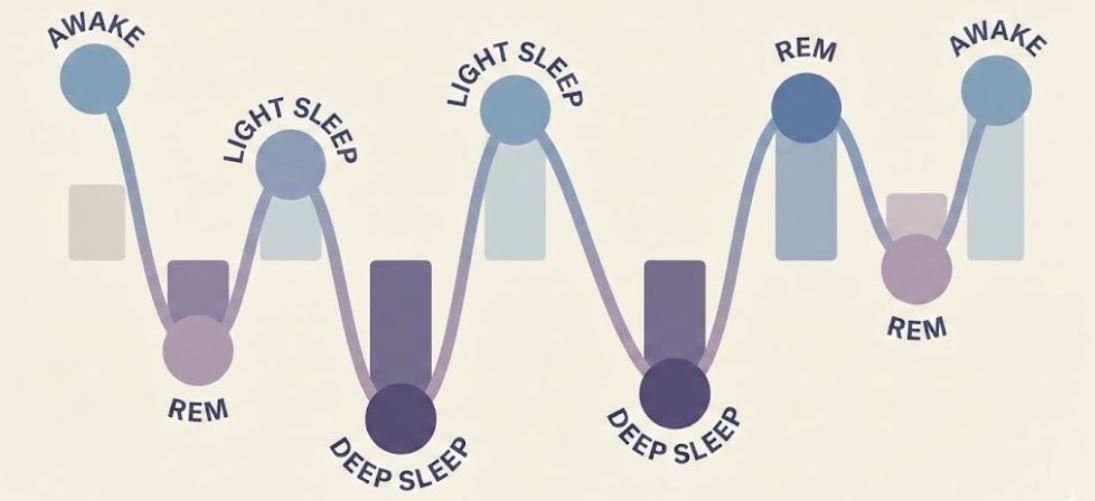
- smooth transitions through sleep stages
- adequate time spent in deeper, restorative sleep
- minimal awakenings or disruptions
- a nervous system that fully downshifts
When sleep is fragmented – by stress, light, noise, or internal alertness – the brain may not spend enough time in the stages responsible for physical and mental recovery.
Why quality often matters more than quantity
If sleep is shallow or frequently interrupted, extending time in bed doesn’t always help. You may get more hours, but not more recovery.
This is why people experiencing chronic stress often feel exhausted despite “sleeping enough.” The nervous system remains partially alert, preventing deeper sleep from doing its work.
In these cases, focusing only on earlier bedtimes or longer sleep windows can increase frustration rather than relief.
The nervous system’s role in sleep quality
Sleep is not something the body can be forced into. It requires a sense of safety.
When stress hormones remain elevated – from mental load, emotional strain, or late-day stimulation – the body may stay in a guarded state. This leads to lighter sleep and more frequent micro-awakenings, even if you don’t remember waking up.
Over time, this pattern reduces the restorative value of sleep, contributing to ongoing fatigue and low resilience.
How to support better sleep quality
Improving sleep quality usually means supporting the body’s ability to downshift, rather than chasing perfect schedules.
Helpful strategies often include:
- reducing stimulation in the hours before bed
- creating consistent evening cues that signal safety
- managing daytime stress so it doesn’t spill into the night
- keeping sleep and wake times reasonably regular
These changes don’t need to be dramatic. Small, repeatable signals tend to matter more than rigid routines.

When quantity still matters
Sleep quality and quantity work together. Even excellent sleep quality can’t fully compensate for consistently short nights.
If sleep duration is severely limited, the body simply doesn’t have enough time to cycle through the stages needed for recovery. In those cases, both length and depth need attention.
The key is balance – not maximizing one at the expense of the other.
Final thoughts
If you’re sleeping enough hours but still feel exhausted, the issue may not be how long you sleep, but how deeply your body is able to rest.
Understanding this distinction can reduce self-blame and shift the focus toward supporting recovery rather than forcing sleep.
For a clear, science-based overview of how sleep stages affect recovery, this resource is widely referenced in the U.S.:
Sleep Foundation – Stages of Sleep
Additional clinical context on sleep health is available here: