
By the time evening rolls around, our bodies are often carrying the weight of the day: stress, tension, and mental clutter. If you’re struggling to switch gears from a hectic day to a peaceful night, gentle yoga could be your solution. 🌙
Yoga before bed isn’t just for flexibility; it’s a way to release physical and emotional tension, inviting your body into a state of relaxation. By incorporating slow, intentional movement and breath, you can signal your nervous system to wind down and prepare for restful sleep.
Why Gentle Yoga is the Perfect Pre-Sleep Ritual
Gentle yoga helps to open up tight muscles, calm an overactive mind, and soothe the nervous system. And the best part? It doesn’t require you to do complex poses or flow through fast sequences. Instead, it’s all about slowing down and inviting your body into a state of ease.
These slow, deliberate movements help your body unwind from the day, releasing stiffness and nervous tension, so you can enjoy deeper, more restful sleep. And it doesn’t matter if you’ve never practiced yoga before – these moves are simple and easy to follow.
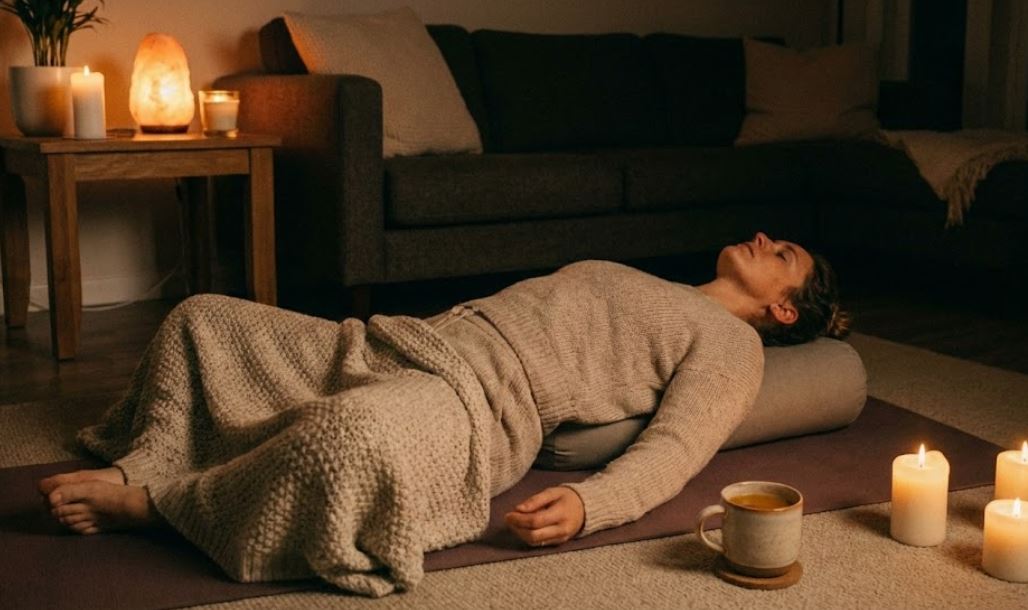
Getting Started: Creating Your Calm Space
Before you begin, set the stage for relaxation. Here’s how to create the perfect environment for your bedtime yoga:
- Dim the lights: Lowering the light levels signals to your body that it’s time to unwind.
- Turn off your phone: Keep distractions to a minimum – we’re unwinding, not multitasking.
- Make it cozy: Grab a blanket, a pillow, and any props that will make you feel supported and comfortable.
With these simple preparations, you’re ready to begin your gentle yoga practice. 🧘♀️
4 Gentle Yoga Poses to Release Tension Before Bed
These 4 yoga poses are designed to calm both your body and mind. They’ll help you release built-up tension and gently guide your body into a state of relaxation for a peaceful night’s sleep.
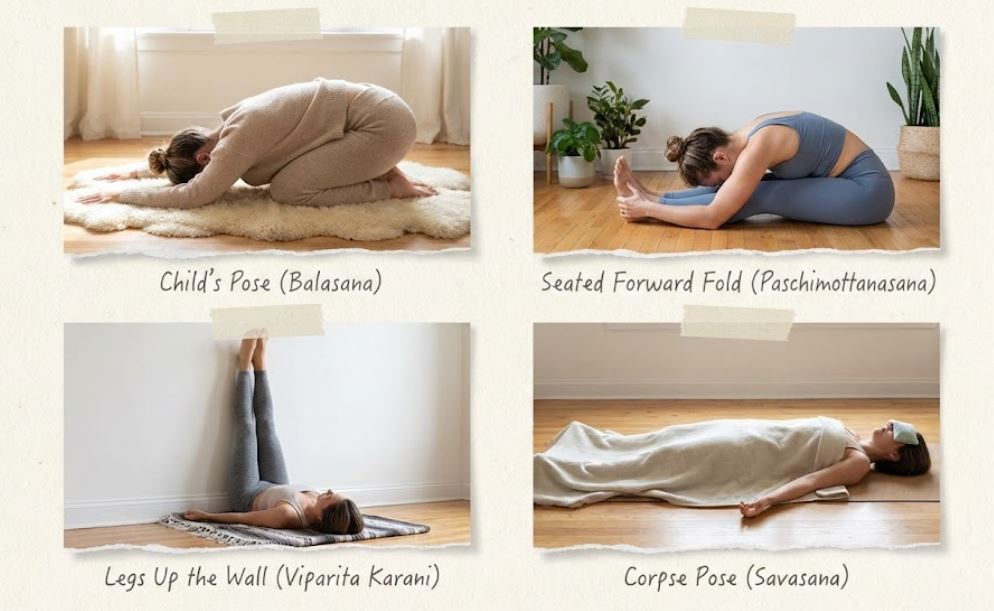
1. Child’s Pose (Balasana)
Start by kneeling on your mat with your big toes touching and knees apart. Slowly lower your torso down towards the floor, extending your arms in front of you or relaxing them at your sides. Rest your forehead on the mat, allowing your body to surrender into the earth. Stay here for 1-3 minutes, breathing deeply and letting go of any stress.
Why it works: This gentle pose stretches the back and hips, releasing tightness that builds up throughout the day. It also helps to calm the mind and activate the parasympathetic nervous system – the one that helps you feel rested and safe.
2. Seated Forward Fold (Paschimottanasana)
Sit on the floor with your legs extended straight in front of you. Inhale to lengthen your spine, and as you exhale, slowly fold forward over your legs. If you can, place your hands on your feet or ankles, and let your head relax down toward your knees. Hold for 1-2 minutes, breathing deeply and allowing your body to soften into the stretch.
Why it works: This forward fold helps release tension in the back and hamstrings, improving flexibility and bringing a sense of calm to your body. It also promotes a gentle stretch for your spine, which naturally relieves muscle stiffness.
3. Legs Up the Wall (Viparita Karani)
Sit next to a wall and lie down on your back. Swing your legs up onto the wall, keeping your hips as close to the wall as possible. Rest your arms by your sides, palms facing up. Close your eyes and take deep, slow breaths, allowing your body to relax. Stay here for 5-10 minutes.
Why it works: This simple, restorative pose helps reverse circulation, encouraging blood flow back to the heart and calming the nervous system. It’s a powerful pose to release the pressure of a long day, helping your body rest deeply.
4. Corpse Pose (Savasana)
End your practice by lying flat on your back with your legs extended and arms by your sides, palms facing up. Close your eyes, and focus on your breath. Let your body melt into the floor, allowing any remaining tension to dissipate. Stay here for at least 5 minutes, focusing on your breath and the sensation of your body completely at rest.
Why it works: Savasana may seem simple, but it’s one of the most powerful poses for deep relaxation. It helps quiet the mind, releasing any lingering thoughts or worries. This is where your body truly absorbs the benefits of your practice, preparing you for restful sleep.
Tips for Making Yoga a Consistent Bedtime Habit
To get the most out of your evening yoga routine, try these tips:
- Be consistent: Aim to do yoga each night before bed to build a natural sleep routine.
- Start with just 10 minutes: You don’t need to commit to a long session; even a short practice can make a big difference.
- Combine with other relaxation techniques: Pair yoga with journaling or deep breathing for a more comprehensive wind-down routine.
Incorporating these simple poses into your evening can help you unwind, release physical tension, and set the stage for a peaceful night of sleep.
Ready to give it a try? Remember, it’s all about letting go and creating space for your body to relax. You deserve rest, and yoga can be the perfect companion for a more restful night.
For more about sleep quality and how your evening habits affect your rest, check out this article from the Sleep Foundation: